CS144-2024 Winter - Lab 1
总览
介绍了 TCP 是可靠的有序字节流,简单介绍了它的地位。以下的 assignments 会基于不可靠的 datagram 来实现可靠的 TCP 协议。在未来的 labs,需要两个 lab 0 中的 ByteStream,一个用于发送数据,一个用于接收数据。
开始
依然是使用 Minnow 库:
- 确保提交了 checkpoint 0 的代码,不要更改
src之外的文件,以及webget.cc。 git fetch来获取最新的 lab assignmentsgit merge name-of-cs144-origin/check1-startercode来下载 checkpoint 1 的初始代码- 确保 build 路径正确设置
- 编译
cmake --build build - 打开并且编辑
writeups/check1.md
按顺序恢复子串
TCP receiver:接收 datagrams,并将其按顺序排列、丢弃重复的、重新请求发送丢失的。
TCP sender:将大的数据流分成小的数据片(1460字节每片)。
实现:Reassembler,接收子串。
- 子串包含字符串、以及其第一个字节的索引 within the larget stream.
- 每个字节都有独立的索引,从 0 开始。
- Reassembler 获取流的 下一个字节 后,就会把它写到输入端的
ByteStream - customer 可以从其中读取内容。
实现所有 reassembler.hh 中的 public 接口,不允许自己修改 public 接口。
Reassembler 内部应该存储什么?
insert 通知 Reassembler 有新的字节流分片,以及其大小(字符串开头的索引)
需要解决三个问题:
- Bytes 是流中的 next bytes,直接写入。
- Bytes 小于 stream 的可用容量范围内,但目前并不能写入,因为之前的 bytes 未知。暂存。
- Bytes 超过了 stream 的可用容量范围。丢弃。Reassembler 不会存储任何不能被立刻写入的字节(包括太大、或者需要等待较早的字节已知的内容)
宗旨是 节省内存容量。到达的不管是什么数据,我们都用以下的图来描述:
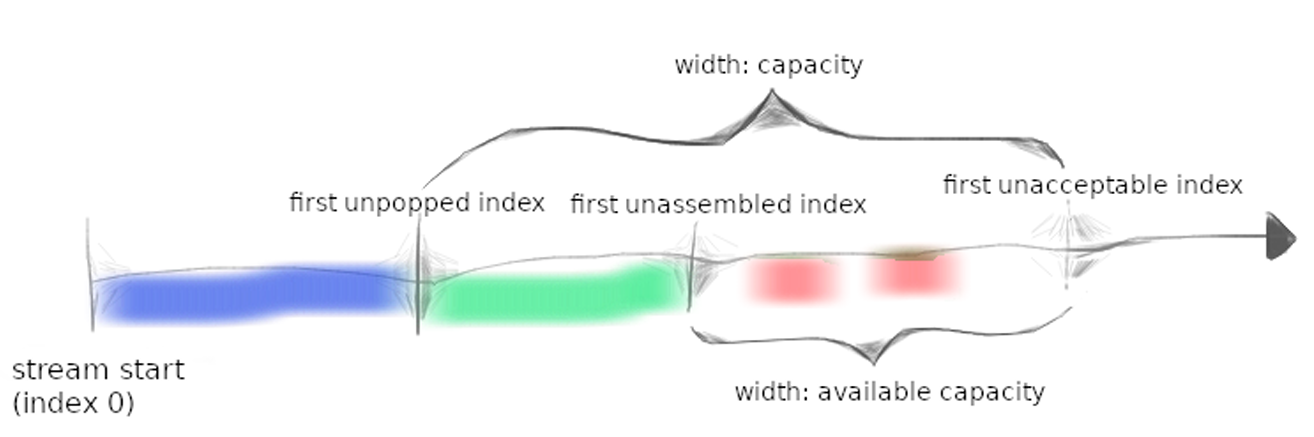
- 红色:Reassembler 内部存储的字节
- 绿色:ByteStream 存储的字节
- 蓝色:已经被 popped 的字节
FAQs
-
整个流的第一个字节的索引是什么?0.
-
我的实现的性能应该是?
选择的数据结构非常重要。不要选择耗时的数据结构或者占据大量空间的结构,Reassembler 会是你的 TCP 实现的基础。你有很多选择。我们已经准备了 benchmark,任何大于 0.1 Gbps 的都可以通过。最大可以实现 10 Gbps 的 Reassembler。
-
如何处理不连续的子串?
你可以假设他们并不存在。就是说,你可以假设存在唯一的底层字节流,所有的子字符串都是其准确的切片。
-
我可能用到?
你可以使用任何标准库组件。特别地,我们希望你至少使用一种数据结构。
-
什么时候将 bytes 写入流?
尽可能快。唯一不能写入的情况就是字节流的前一个字节还没准备好。
-
子串可能会重复吗? 是的。
-
我可以向 Reassembler 添加 private 成员函数吗?
当然。子串可能以任何顺序到达,所以你的数据结构需要记住子串的顺序,直到他们被 push 进入 Stream,即在该子串的前面所有字节都写入完成。
-
我们的 re-assembly 结构可以存储重复子串吗?
不可以。即使你可以正确的实现,但是这样会打破节约内存的规则。
-
Reassembler 会使用 ByteStream 的读端吗?
不会。这是外部消费者做的。Reassembler 仅使用写端。
-
你们预期的实现是多少?
运行 ./scripts/lines-of-code 会打印你的代码行数。我们希望 Reassembler 在 50 - 60行左右(starter code 的基础上)
经过几个小时的折磨,终于弄清楚了
insert的逻辑。
bytes_pending()很简单,记录一下 pending 长度就行,主要的问题在于insert()的情况比较复杂。按照
first_index参数来区分情况,首先先去重,也就是first_index < next_index_的情况,把重复的内容去掉。去重后记得更新
first_index。什么时候会写入呢?自己维护一个
next_index,然后first_index == next_index时就写入。要注意容量吗?并不用,p0 我们实现的 byte stream 已经处理了。
此外,
next_index大概对应上图的first unassembled index,而first_index是每个子串的 index。注意看图中红色的部分是断开的,那我们自然也不能用std::vector<char>来存储这些 bytes。我认为用std::map<uint64_t, std::string>存就可以,这样少一些复制。什么时候会保存在 Reassembler 中呢?**写入操作不需要保存,不会出现写一半存一半的情况。**只有前面的内容没收到时才保存。
保存非常麻烦,要考虑容量问题。
容量足够的话就不说了,直接存入;
容量不够的话,要截断,怎么截断?
容量,指的是 output stream 的容量,上面的图里画了。 截断时要留下
first_index - next_index空间,这样才能够前文写入。我的做法是,先在 map 中查找有没有
first_index的存在,有的话,比较两个字符串的大小,留下长的。之后就是遍历所有的结点,去掉重复的内容,怎么去除呢?
插入字符串的
first_index ~ final_index期间的所有 map 结点都 erase 就好。然后遍历所有的结点,把前一个结点和后一个结点重复的部分去除就行。
但是要注意插入的字符串已经是某个 pending 字符串子串的情况。这种情况直接返回。
记得要把 pending 的字符串写入,不会出现容量不够的情况,上面已经说了容量的计算了。然后把
first_index <= next_index_的内容全部写入,直接调用现有函数就行。最后关于
close写端,需要在写入所有的字节后关闭,但可能字节为 0,所以我用了个std::optional来记录,如果没有确定 last index,那么就是空,否则就不为空,之后判断就行。这种解法已经是我能想到最快的了,跟字符串有关的操作全部都是
O(1),没有复制开销,全部是移动,然后要遍历所有的结点。
开发和 Debug 建议
-
你可以通过
cmake --build build --target check1来测试代码(编译之后)我寻思
cmake --build不应该已经编译了吗,不过我好像也没怎么用过 cmake 的指令… -
重新读一次
Lab 0的 using git 部分,确保代码最新。 -
说了一堆,意思就是让你代码内容明确,然后写点注释
-
保证 Modern C++
-
如果你编译卡住了又没法修复,你可以删除
build目录,然后根目录下cmake -S . -B build
提交
-
保证仅修改
/src下的.hh.cc文件,不要修改public接口。 -
在你写作业之前,请按顺序运行:
-
确保已经 commit 了所有的修改,可以用
git status查看。 -
cmake --build build --target formatVSCode + clang-format 大法好
-
cmake --build build --target check1(确保所有测试通过) -
可选:
cmake --build build --target tidy(改进代码)
-
-
编写报告
check1.md,一行控制在 80 个字符以内,最好 20~50,这样容易读。太长了我又不写这个,不翻译。
-
注意填写你做了几个小时,以及其他的评论
-
The mechanics of “how to turn it in” will be announced before the deadline.
-
Please let the course staff know ASAP of any problems at the lab session, or by posting a question on Ed. Good luck
源代码
#pragma once

#include "byte_stream.hh"
#include <map>
#include <optional>
class Reassembler
{
public:
  // Construct Reassembler to write into given ByteStream.
  explicit Reassembler( ByteStream&& output ) : output_( std::move( output ) ) {}

  /*
   * Insert a new substring to be reassembled into a ByteStream.
   *   `first_index`: the index of the first byte of the substring
   *   `data`: the substring itself
   *   `is_last_substring`: this substring represents the end of the stream
   *   `output`: a mutable reference to the Writer
   *
   * The Reassembler's job is to reassemble the indexed substrings (possibly out-of-order
   * and possibly overlapping) back into the original ByteStream. As soon as the Reassembler
   * learns the next byte in the stream, it should write it to the output.
   *
   * If the Reassembler learns about bytes that fit within the stream's available capacity
   * but can't yet be written (because earlier bytes remain unknown), it should store them
   * internally until the gaps are filled in.
   *
   * The Reassembler should discard any bytes that lie beyond the stream's available capacity
   * (i.e., bytes that couldn't be written even if earlier gaps get filled in).
   *
   * The Reassembler should close the stream after writing the last byte.
   */
  void insert( uint64_t first_index, std::string data, bool is_last_substring );

  // How many bytes are stored in the Reassembler itself?
  uint64_t bytes_pending() const;

  // Access output stream reader
  Reader& reader() { return output_.reader(); }
  const Reader& reader() const { return output_.reader(); }

  // Access output stream writer, but const-only (can't write from outside)
  const Writer& writer() const { return output_.writer(); }

private:
  void insert_or_store( uint64_t first_index, std::string data );

  void write_stored_str();

  void write( std::string data );

  void store( uint64_t first_index, std::string data );

  uint64_t truncate_head( uint64_t old_index, std::string& data );

private:
  ByteStream output_; // the Reassembler writes to this ByteStream

  std::map<uint64_t, std::string> pending_substr_ {};

  uint64_t bytes_pending_ {};

  uint64_t next_index_ {};

  std::optional<uint64_t> total_pushed_len_ { std::nullopt };
};
#include "reassembler.hh"
#include <iostream>
#include <utility>
#include <vector>
using namespace std;
void Reassembler::insert( uint64_t first_index, string data, bool is_last_substring )
{
if ( is_last_substring ) [[unlikely]] {
total_pushed_len_ = first_index + data.length();
}
insert_or_store( first_index, std::move( data ) );
write_stored_str();
if ( total_pushed_len_.has_value() && output_.writer().bytes_pushed() == *total_pushed_len_ ) [[unlikely]] {
output_.writer().close();
}
}
void Reassembler::insert_or_store( uint64_t first_index, std::string data )
{
if ( first_index < next_index_ ) {
first_index = truncate_head( first_index, data );
}
if ( first_index > next_index_ ) {
store( first_index, std::move( data ) );
} else {
write( std::move( data ) );
}
}
void Reassembler::write_stored_str()
{
for ( auto& [first_index, data] : pending_substr_ ) {
if ( first_index <= next_index_ ) {
auto buf = std::exchange( data, "" );
bytes_pending_ -= buf.length();
insert_or_store( first_index, std::move( buf ) );
}
}
std::erase_if( pending_substr_, []( const auto& elem ) { return elem.second.empty(); } );
}
void Reassembler::write( std::string data )
{
output_.writer().push( std::move( data ) );
next_index_ = output_.writer().bytes_pushed();
}
void Reassembler::store( uint64_t first_index, std::string data )
{
if ( auto len = output_.writer().available_capacity() - ( first_index - next_index_ ); data.length() >= len ) {
data.erase( data.begin() + len, data.end() );
}
if ( data.empty() ) [[unlikely]] {
return;
}
if ( pending_substr_.empty() ) [[unlikely]] {
bytes_pending_ += data.length();
pending_substr_.emplace( first_index, std::move( data ) );
} else {
auto final_index = first_index + data.length() - 1;
if ( pending_substr_.contains( first_index ) ) {
if ( pending_substr_[first_index].length() >= data.length() ) {
return;
}
auto mapped_data = std::exchange( pending_substr_[first_index], "" );
bytes_pending_ -= mapped_data.length();
pending_substr_.erase( first_index );
}
std::erase_if( pending_substr_, [&]( const auto& node ) {
if ( node.first >= first_index && node.first + node.second.length() - 1 <= final_index ) {
bytes_pending_ -= node.second.length();
return true;
}
return false;
} );
for ( const auto& [idx, str] : pending_substr_ ) {
if ( first_index >= idx && final_index <= idx + str.length() - 1 ) {
return;
}
}
bytes_pending_ += data.length();
pending_substr_.emplace( first_index, std::move( data ) );
auto begin_node = pending_substr_.lower_bound( first_index );
auto end_node = pending_substr_.upper_bound( final_index );
if ( begin_node != std::begin( pending_substr_ ) ) {
begin_node = std::prev( begin_node );
}
for ( auto node = begin_node; std::next( node ) != end_node; ++node ) {
auto next_node = std::next( node );
auto this_final_index = node->first + node->second.length() - 1;
auto next_first_index = next_node->first;
if ( this_final_index >= next_first_index ) [[likely]] {
auto len = this_final_index - next_first_index + 1;
bytes_pending_ -= len;
node->second.erase( node->second.begin() + node->second.length() - len, node->second.end() );
}
}
}
}
uint64_t Reassembler::truncate_head( uint64_t old_index, std::string& data )
{
data.erase( 0, next_index_ - old_index );
return next_index_;
}
uint64_t Reassembler::bytes_pending() const
{
return bytes_pending_;
}